I've lost count of how many times I've driven up to Parvati Valley now. Every single time, somewhere around Bhuntar, the air changes — thinner, colder, cleaner — and I feel the same thing I felt the first time: relief. Not excitement exactly. Relief. Like the valley is exhaling and I'm exhaling with it.
This guide isn't a listicle. It's the version of the valley I'd actually tell a friend about, if they called me the night before their trip and asked where to go.
If you're driving up from Delhi or flying into Dehradun first, take the extra day. Dehradun is a good place to slow your nervous system down before the mountains do it for you properly. We built Ark Inn Dehradun for exactly this — a stop where you shower off the city, eat something warm, sleep well, and start the drive to Bhuntar the next morning instead of doing it in one exhausting stretch. Parvati Valley rewards people who arrive rested. It has a way of humbling people who arrive frazzled.
Kasol gets a bad rap sometimes, and I understand why — it's crowded, commercial, full of Israeli cafés and people selling the same three things at every stall. But I still like it. It's where the valley announces itself. The Parvati river is loud here, properly loud, and there's a version of Kasol at 6am, before the shops open, that's genuinely beautiful — mist over the water, a few dogs, someone's grandmother sweeping her doorstep.
Use Kasol as a supply stop, not a base. Buy your last real internet connection here, your last ATM withdrawal, your last confident phone call to someone back home. Then keep going.
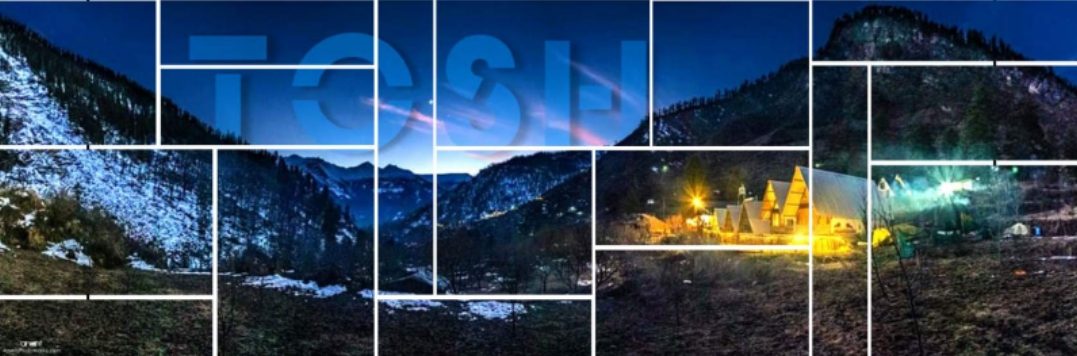
If I had to pick one village to actually stay in, it's Tosh. Not because it's undiscovered — it isn't anymore — but because it still holds its shape. The walk up from the road, the terraced fields, the wooden houses stacked into the hillside, the sound of the stream that never really stops — Tosh has a rhythm that Kasol lost somewhere along the way.
The team at StonedAge wrote a piece that says it better than I can — 5 Reasons Why Tosh Will Ruin Every Other Mountain Trip — and I agree with almost every word of it. It's the valley's sweet spot: high enough to feel remote, low enough to be genuinely livable, and small enough that you actually get to know the village instead of just passing through it.
For what to actually do once you're there, their guide on What Not to Miss in Tosh is the most honest one I've read. Sit by the stream near the old wooden bridge in the evening. Eat at the small local places rather than the ones with the loudest menus. Talk to people who've lived there longer than the tourism has.
We built StonedAge at 7,874 feet, and I'll be honest about why — I wanted a place in Tosh that felt handbuilt, because it is. The cottages are stone, stacked the way houses here have always been stacked, using local material and local hands. No glass towers pretending to belong in the mountains. Just a quiet stone structure that sits into the hillside the way it should.
I'm not going to oversell it. It's not a resort. There's no spa menu. What there is: silence at night that you can actually hear, mountain air that does something to your sleep within two days, and mornings where the valley is doing all the work of waking you up before your alarm does.
Kheerganga is the trek most people in the valley eventually do, and it should be. It's roughly 4-5 hours up from Barshaini, through pine forest that thins out the higher you go, until you reach a wide meadow with a natural hot spring at nearly 3,050 metres. The water is genuinely hot, genuinely mineral, and genuinely worth every uphill step it takes to get there.
Go slow. Camp overnight if you can — the campsite fills up but the sunrise over the meadow is the whole reason to stay. StonedAge's own piece on Treks That Start From Your Doorstep covers this and a few other routes that begin almost literally outside the door in Tosh — which is the other reason I love basing there. You don't need a jeep to start your day's adventure. You just need boots.
Malana is different from anywhere else in the valley, and it deserves a different kind of visitor. The village has its own governance, its own customs, and a fairly firm boundary around what outsiders are permitted to touch, photograph, or enter. Go if you're genuinely curious about one of the oldest continuously self-governed communities in the Himalayas — not for the cream, which has become a punchline more than a point of interest. Follow the signage, don't touch the houses or temple structures, and you'll leave with something more interesting than a photo.
Parvati Valley isn't a secret anymore, and I don't think pretending otherwise helps anyone. What it still has, if you choose carefully where you stay and how slowly you move, is the ability to make you forget your notifications for four or five days. That's rarer than it sounds. Start in Dehradun, gateway through Kasol, base yourself in Tosh, earn Kheerganga, and visit Malana with some humility. That's the valley, as honestly as I know how to describe it.
Stories, offers, and updates from Musée Living — no spam, just things worth reading.